Flat-rate or metered utilities in a rental? (when each one wins)
RentTab · Published: 4 August 2026
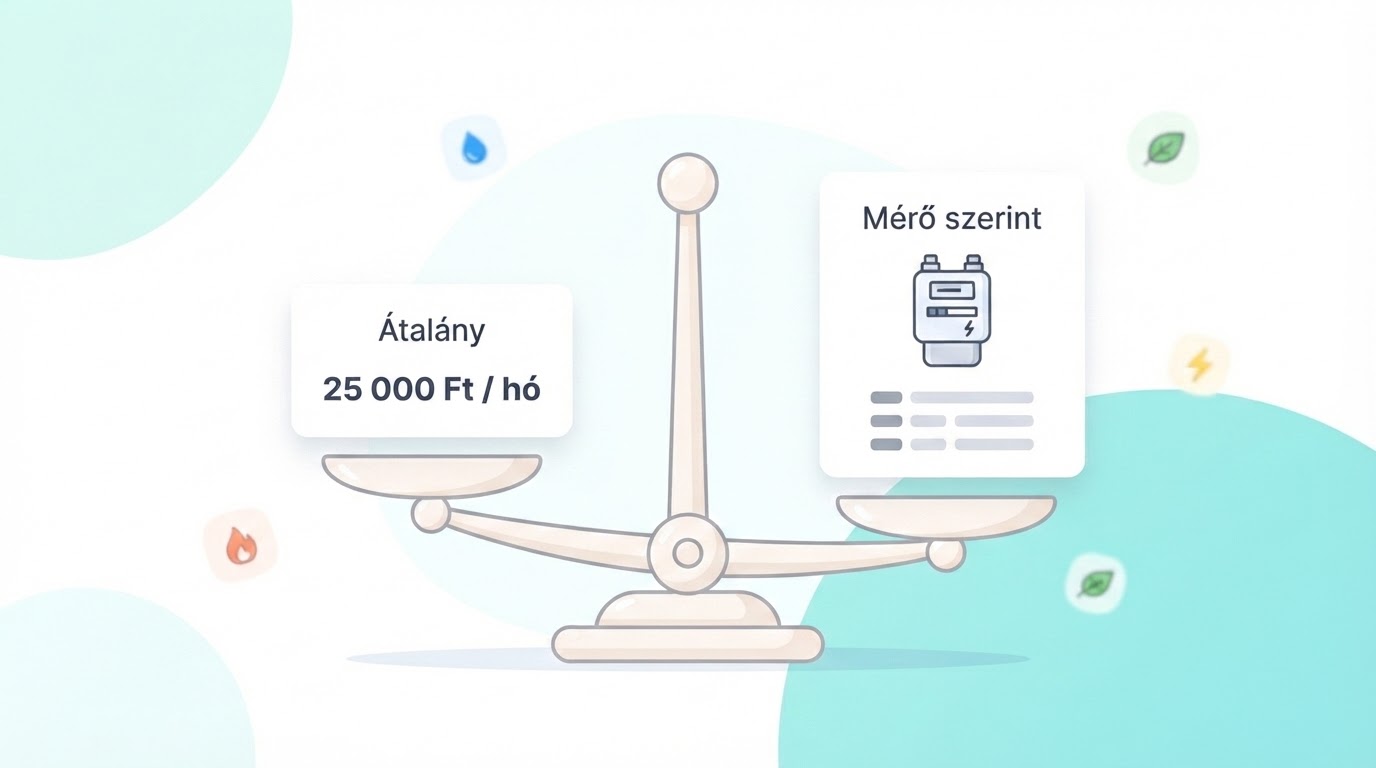
You can charge utilities in a rental two ways: as a flat rate (a fixed monthly amount regardless of usage) or metered (billed on actual meter readings, itemised). For short, furnished lets a flat rate is simpler but riskier; for long-term tenancies with real usage, metered billing is fairer and never generates a hidden loss for you. Whichever you pick, put it in the lease.
This article shows with a worked example when each model pays off for you as a landlord, where the flat rate can backfire, and how to set it up so you don’t end up subsidising the bill.
What’s the difference?
- Flat-rate utilities: the tenant pays a fixed amount each month on top of rent (say €65), no matter how much they use. You pay the real bills to the provider; the difference is your risk (or your margin).
- Metered (usage-based) utilities: each period you read the meters and the tenant pays actual usage (usage × unit price + standing charge), plus any usage-independent fixed fees such as building maintenance.
The key difference is who carries the risk. With a flat rate, the consumption risk is yours; with metered billing, it’s the tenant’s. That’s why during heating season, or with a tenant who’s home a lot, a flat rate can quickly turn into a loss.
Worked example: when does a flat rate lose money?
Say you charge a €65/month flat rate for utilities.
| Month | Real cost of tenant’s usage | Flat rate (€65) | Your result |
|---|---|---|---|
| April (mild) | €42 | €65 | +€23 |
| July (AC) | €73 | €65 | −€8 |
| January (heating) | €107 | €65 | −€42 |
Over a year, the winter months can easily swallow the summer “profit”. One cold winter, one heavy-heating tenant, or a single price increase — and the flat rate comes out of your pocket. With metered billing that risk simply doesn’t exist: the tenant always pays actual usage and you break even.
When does a flat rate make sense?
A flat rate has its place, but a narrow one:
- Short lets / no account transfer: when you can’t or don’t want to put the provider account in the tenant’s name (e.g. a furnished, few-month let).
- Shared meter, no sub-metering: in a flatshare with no per-room meters, a fairly calculated flat rate beats endless splitting.
- Very stable, low usage: for a single tenant who’s often away, a flat rate is predictable for both sides.
If you go flat-rate, don’t pluck the number from thin air: look at the last 12 months of real bills, take the yearly average, and add a seasonal buffer for the winter peak. State in the lease that the flat rate can be reviewed yearly or after a significant price increase.
When does metered billing win?
For almost every long-term tenancy with its own meters, this is the winner:
- Fair: the tenant pays exactly what they use — which cuts both disputes and waste (they have a reason to save too).
- No hidden loss: a price increase automatically passes to the tenant, not to you.
- Transparent: every line is backed by a meter reading and a unit price. That’s what the utility settlement process is about.
Its only “downside” is that you have to read the meters and settle up each period. But a photo of the meter takes a minute — in fact you can capture the reading straight from a photo rather than doing the maths by hand. RentTab is a rental-management and utility-settlement app that turns your meter readings into an itemised statement automatically, so running the metered model is no more work than a flat rate — just fairer.
Hybrid model: flat rate for fixed fees, metered for usage
In practice the hybrid approach is often best:
- Usage-based fees (water, gas, electricity) → metered, on actual readings.
- Usage-independent fixed fees (building maintenance, waste, maybe internet) → a fixed flat amount alongside rent.
That keeps the consumption risk with the tenant while sparing you monthly maths on the fixed items. Exactly who pays which fee is worth spelling out line by line in the lease.
What to put in the lease
Whichever model you choose, the lease should state clearly:
- How each fee is charged — flat rate or metered (per fee type).
- For a flat rate: the exact amount, what it covers, and when it can be reviewed (e.g. yearly, or after a price increase above 10%).
- For metered billing: how often you read, who reads, and that opening readings are captured with a photo at move-in.
- Settlement deadline and method — when the statement is prepared and how you settle any difference.
A flat rate is not the same as “gross rent”: for tax, your rent is income, while utilities re-billed on actual usage typically are not — but utilities bundled into a flat rate may be treated differently. Always confirm the current rule with your local tax authority or accountant.
Summary
- Short, furnished, no sub-meter let → a flat rate is fine, but set it carefully from real bills.
- Long-term let with its own meters → metered billing; it generates no loss and stays fair.
- Best for most: the hybrid model — usage metered, fixed fees flat.
If the maths is what has been keeping you from metered billing, see how RentTab automates the path from reading to finished statement.
Frequently asked questions
How much should the utility flat rate be? There’s no fixed rule — start from the average of the last 12 months of real bills, plus a seasonal buffer for the winter heating peak. A number picked from thin air is either too high (it scares off tenants) or too low (you subsidise it).
Is metered utility billing mandatory? No, it’s up to the parties. But if the flat has its own meters, metered billing is the fairest and least disputable option.
Who pays for a price increase with a flat rate? If the lease has no review clause, the landlord absorbs the increase, because the flat rate is fixed. So add a review clause (e.g. yearly or on a significant increase).
Should you record readings with a flat rate too? Not required, but it’s still worth taking a photo of the readings at move-in and move-out, so you avoid disputes over unusually high usage.
Which is cheaper for the landlord? Long term, metered billing, because it carries no consumption risk. A flat rate is only “cheaper” if the tenant uses little — which you can’t guarantee in advance.